
-
8am Tuesday, 1 October 2024
-
Community engagement opens
Share your feedback on stage 1.
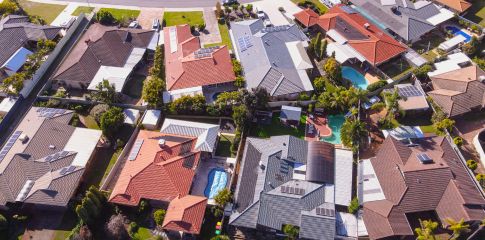
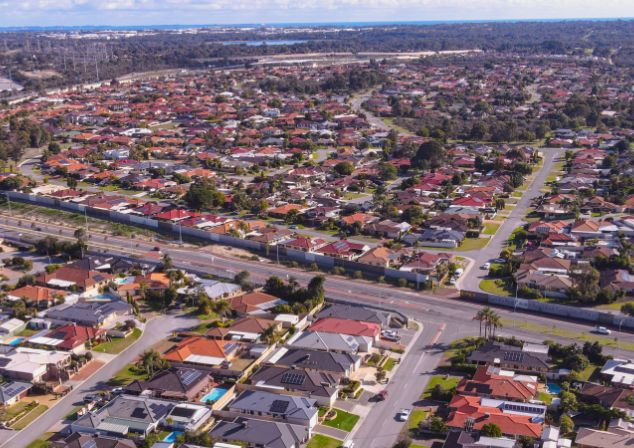
Trees are more than just a beautiful part of our City - they're vital to our environment and community. But did you know that 45% of our urban forest is actually on private land? This means that managing and protecting green spaces on private property is crucial for preserving our urban forest and its many benefits. With a concerning decline in our tree cover, it’s essential for the City to explore strategies for maintaining trees on private land.
Engagement Updates
-
16 June 2026
Council to consider draft Local Planning Policy 1.24 - Regulated Trees on Private Land
Following community feedback, a draft Tree Retention Policy will be considered by Council in June 2026.
-
12 December 2025
Council to develop a new policy for trees on private land
Council has requested the development of a draft Local Planning Policy to support the retention of mature trees on private land while allowing reasonable development to proceed.
Recent surveys have highlighted a significant reduction in the City’s tree canopy. Between 2017 and 2022, over 100 hectares of tree cover (defined as trees taller than three metres) were lost on private land, while tree cover on public land increased by only 20 hectares during the same period. This decline threatens the many well-known benefits of large trees, such as providing shade, enhancing biodiversity, and urban cooling. It also impacts lesser-known benefits including increased property values, reduced energy costs, climate change mitigation, and improved water quality.
Since adopting the Urban Forest Strategy in 2017, our focus has been on managing trees on public land. However, recent analysis shows that we need to take additional steps. Feedback received from our community through the Our Future Melville, Local Planning Scheme 6 review, and the Community Climate Action Plan has highlighted how much our residents value green spaces, trees, and climate action.
Several local governments have developed or are developing policies specifically focussed on retaining trees on private land. The City of Melville is also exploring options, including a flexible approach that would enable property owners to continue developing their land while planting and maintaining replacement trees. By working together to preserve and enhance our urban forest, we can create a healthier and more vibrant environment for future generations.
Opportunities to get involved
Community feedback for this project closed on Sunday, 17 November 2024.
At the December Ordinary Meeting of Council, Council noted strong community interest in better managing the loss of trees on private land and requested the CEO prepare a draft Local Planning Policy to support the retention of mature trees while enabling reasonable development.
A report is being presented to the June 2026 Ordinary Meeting of Council seeking endorsement of the draft Local Planning Policy - Regulated Trees on Private Land for the purpose of public advertising. If endorsed, the draft policy will be released for public comment before being considered for final adoption.
Until a Local Planning Policy is developed and formally adopted, the City will continue to apply its current practice, under which no permission or separate development approval is required to remove a tree on private land.
FAQs
An urban forest includes all the trees and other vegetation within the city, as well as the soil and water that supports it. It can be separated into:
- Understorey, such as shrubs and hedges up to 3 metres, and
- Tree canopy, which is any vegetation above 3 metres.
The recent tree canopy survey indicates that of the whole of Melville, tree canopy covers 12.5% of the total City area, a reduction from 13.9% in 2016. Mapping analysis indicates that the key contributors to this loss are trees being removed during construction (e.g. subdivision and development), and trees being removed from the road reserve to facilitate development.
The canopy mapping undertaken in 2022 indicates a total tree canopy of 12.5%. Of this, 54% is on public land and 45% is on private land.
It has not yet been decided whether the City will develop a Local Planning Policy for tree retention. The initial phase of the project involves assessing support for strategies related to tree retention.
A report item is being presented to Council for their consideration.
The City encourages retention of trees on private land as part of the development assessment process and works to identify opportunities to retain trees through building design process.
The Residential Planning Codes (R-Codes) require a “deep soil area” to allow space for larger trees to be planted in single, grouped and multiple dwelling developments.
The City provides free street trees for residents, as well as the annual native plant giveaway to encourage residents to plant native gardens and create waterwise verges.
There is no single definition of a ‘large tree’. Different local governments use different criteria, a common criteria being the height of the tree and the circumference of its trunk. For the purposes of calculating Melville’s total tree canopy, the City Urban Forest Strategy identifies trees 3m and higher.
If the City were to propose a local planning policy, the policy would need to define what size a tree needs to be before it triggers the provisions in the policy.
Not at this time. There are no requirements for permission and/or approval to prune or remove a tree on private land. Note, you cannot prune/remove a tree on public land (including your verge) without approval from the City.
A significant tree register is a document that lists the trees in a local government area that are considered to be outstanding for one reason or another, so much so that they warrant protection. The register sets out a description of each significant tree, its location and the reason for its protection. Trees that are listed on the City's significant tree register are protected under the City's Local Planning Scheme.
If the City was to introduce a significant tree register, property owners would need to self-nominate a tree or group of trees within their property for inclusion on the register. These trees would be assessed by the City against a criteria to determine whether they were suitable to be added to the register. Unlike a local planning policy, protections afforded by the register would only apply to those trees that have been nominated, assessed and approved for addition to the register.
A significant tree register is designed to focus on protecting a small number of notable trees, rather than the broader tree canopy and the various benefits it brings.
Local planning policies are created under the City’s Local Planning Scheme, and exist to guide the City in making decisions. A local planning policy on trees would not only define trees that were of a scale that warranted a development application to remove/heavily prune, but also guide the City in assessing how to deal with an application once it was lodged.
A policy would apply automatically to all trees that met the policy's criteria, which would allow it to more effectively manage tree loss/replacement on private land from day one. Policies are also more agile, in that they can be modified quickly to respond to needs and concerns.
The 2024 review of the Urban Forest Strategy looked at all available public land for tree planting, including areas like Attadale Foreshore, but not spaces used for community sports fields. Even if all this land were filled with trees, City of Melville’s canopy cover would still only reach 17%. Achieving that 17% would require planting and maintaining a staggering 68,000 additional trees. This highlights the significant role that trees on private land play in the City’s overall canopy.
This review has sparked important conversations about trees on private land. Interest in maintaining trees has been increasing in recent years, as more people recognise their aesthetic and environmental benefits, which enhance the beauty, health, and livability of urban and suburban areas.
Protecting the City's diminishing tree canopy has been a crucial topic for years, highlighted in the Council Plan 2024-2034, the declaration of a climate emergency, and various Council reports.
The first round of engagement was looking to understand the community's thoughts on trees, and whether the City should have a role in regulating tree canopy loss on private land. At this point, our focus has been on gauging initial reactions and gathering feedback.
If Council decides to progress a Local Planning Policy, further community consultation will be undertaken at that stage.
Community could share their feedback by submitting a submission online, in writing or over the phone, or by attending one of the pop up events.
If Council decides to progress a Local Planning Policy, further community consultation will be undertaken at that stage.
Feedback received during the initial stage of engagement was presented back to Council, along with a list of recommendations for their consideration .
Some local governments have “Significant Tree Registers” in their planning schemes. Residents can opt-in to have their trees considered and potentially included in a significant tree register, which would then see those trees protected. Some local governments (e.g. cities of Nedlands, South Perth, Fremantle and Cockburn) have approved or are pursuing planning policies to protect and enhance trees on private property.
The Department of Planning, Lands and Heritage (DLPH) is currently preparing an urban forest strategy for Perth and Peel.
The City of Melville Council is the final decision-maker.
You can find out more by visiting the following pages on our website.
Ordinary Council Minutes December 2025
Timeline
-
10-12pm Monday, 14 October 2024
-
Listening post location 1 - South of the River Forum
-
12-3pm Saturday, 19 October 2024
-
Listening post location 2 - Pups in the Park
Winnacott Reserve
-
9.30am-3.30pm Sunday, 3 November 2024
-
Listening post location 3 - Perth Makers Market
Goolugatup Heathcote Reserve
-
Midnight Sunday, 17 November 2024
-
Community engagement closes
CIVIC Building City of Melville
-
November - December
-
Feedback under review
-
22 July 2025
-
Elected Members Engagement Session
Presentation and workshop with Elected Members
-
9 December 2025
-
Ordinary Meeting of Council
-
16 June 2026
-
Ordinary Meeting of Council
Council consider draft policy for public advertising
Contact us
If you require any further information, please contact us.
| Strategic Planning Team | Gavin Giles |
|---|---|
| Phone | 08 9364 0666 |
[email protected] |
Was this page helpful?