
-
15 July 2025 - 15 September 2025
-
Community consultation
Community invited to view proposed updates and provide formal comment
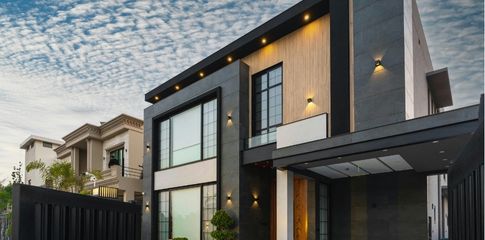
The City of Melville regularly reviews its local planning policies to ensure they remain clear, consistent, and aligned with best practice. These policies guide how certain types of development and planning applications are assessed and determined. We are now proposing updates to Local Planning Policy 3.1 – Residential Development and Local Planning Policy 1.9 – Height of Buildings.
Engagement Updates
-
24 July 2026
Melville Talks has moved – registration required
We've recently moved all City of Melville engagements to a new engagement platform to improve your experience and meet the requirements of Western Australia's new privacy legislation.
-
12 December 2025
LPP3.1 referred back for further Elected Member Input
Council has referred Local Planning Policy 3.1 back to the Policy and Legislation Committee to allow further input from Elected Members.
-
08 December 2025
Council to consider policy options
A report will be presented at the December 2025 Ordinary Meeting of Council for consideration.
The review of LPP1.9 and LPP3.1 has presented an opportunity to amalgamate the two policies into a single, comprehensive policy guiding the City’s assessment of residential development. As part of this update, LPP1.9 would be rescinded, with key building height provisions incorporated into LPP3.1.
The proposed changes aim to simplify the planning framework, ensuring alignment with the Residential Design Codes, and enhance clarity, design quality, and residential amenity. The amendments also seek to rationalise deemed-to-comply building heights to better reflect State planning policy.
This approach supports the City’s commitment to continuous improvement, best practice planning, and responsive policy development.
Local Planning Policy 3.1 – Residential Development (LPP3.1) covers requirements for the development of new houses and additions to existing houses such as carports, patios and fences. The policy currently provides an alternative set of deemed-to-comply (DTC) criteria for certain design elements of the Residential Design Codes of Western Australia (R-Codes) Volume 1.
Local Planning Policy 1.9 – Height of Buildings (LPP1.9) policy outlines the allowable building heights for development outside our activity centre plan areas. The policy currently provides guidance regarding the interpretation and application of building height controls throughout the City, in order to ensure that the height of buildings is consistent with the desired character of the locality.
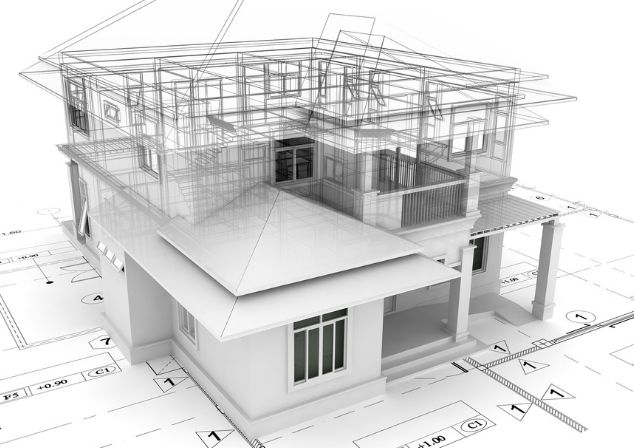
Proposed amendments to LPP3.1
Key updates include:
- Customer First Approach introduced.
- A new introductory paragraph explains the purpose of the policy and directs users to further information.
- Clarifies that LPP3.1 only modifies Part B of the R-Codes, not Part C, in response to customer feedback.
- The background section has been removed as it does not assist with policy application or enforcement.
- A new clause confirms the policy is made under the Planning and Development (Local Planning Schemes) Regulations 2015 and LPS6.
- Policy modifications aim to better align with R-Codes (Part B), keeping effective provisions, updating ineffective ones, and removing unnecessary complexity.
- Scope section updated to clearly explain when LPP 3.1 applies, what R-Code clauses are modified, and when performance assessment is required.
- An additional objective has been included to reflect the incorporation of building height modifications (R-Code 5.1.6).
- The definition and associated provisions for "Gatehouse" structures has been removed.
Explore the FAQs below for a detailed summary of the proposed amendments.
What's happening now
At the December Ordinary Meeting of Council, Council resolved to refer Local Planning Policy 3.1 back to the Policy and Legislation Committee. This will occur following an Elected Member Engagement Session to provide further opportunity for input before the Committee considers the item again.
Minutes from the council meeting
It is anticipated this item will be presented back to Council in 2026.
Timeline
-
9 December 2025
-
Ordinary Meeting of Council
Council resolved to refer proposed amendments back to the Policy and Legislation Committee
Contact us
| Contact | Liam Jonhson, Senior Statutory Planner |
|---|---|
| Phone | 08 9364 0666 |
| [email protected] |
The Planning and Development (Local Planning Schemes) Regulations 2015 enable local governments to prepare Local Planning Policies (LPPs) that may address strategic or operational considerations on planning matters.
- Local Planning Policy 3.1 – Residential Development (LPP3.1) covers requirements for the development of new houses and additions to existing houses such as carports, patios and fences. The policy currently provides an alternative set of deemed-to-comply (DTC) criteria for certain design elements of the Residential Design Codes of Western Australia (R-Codes) Volume 1.
- Local Planning Policy 1.9 – Height of Buildings (LPP1.9) policy outlines the allowable building heights for development outside our activity centre plan areas. The policy currently provides guidance regarding the interpretation and application of building height controls throughout the City, in order to ensure that the height of buildings is consistent with the desired character of the locality.
The review of LPP1.9 and LPP3.1 outlined an opportunity to amalgamate the two policies into a single, comprehensive policy, which aims to streamline and simplify the City’s planning framework.
The City's intent is to provide a more user-friendly policy suite, with one main document applicable to the assessment of residential development applications.
The following modifications to the Policy Statement section of LPP3.1 recommended are as follows:
| R-Code Provision | Summary of proposed modifications to current LPP3.1. |
| 5.1.2 Street setbacks | To be removed and default to the DTC of the R-Codes. |
| 5.1.3 Lot boundary setbacks (boundary walls) | Remove C3.5 within Clause 6 in relation to vertical screening structures being considered boundary walls. All other modifications in Clause 6 are proposed to be retained. |
| 5.2.1 Setbacks of garages and carports | Modifications to the DTC of R-Code Clause 5.2.1 as contained currently in LPP3.1 are to be removed and default to the DTC of the R-Codes. |
| 5.2.2 Garage width | Clause 4, C2.1 and C2.3 to be removed and default to the DTC of the R-Codes. Clause C2.2 is proposed to be retained as verbatim as it affords single storey single houses and grouped dwellings the capacity to have garages more than 50% of the frontage as of right, subject to strict design guidelines. |
| 5.2.4 Street walls and fences | Clause 3 of LPP3.1 are recommended to be modified as follows;
|
| 5.2.5 Sight lines | Clause 5 to be modified to permit: “one fencing pier to a maximum width of 0.35m may be located within 1.5m of the above sightline areas where it directly abuts the driveway and the lot boundary, with any other associated fencing infill panels above 0.75m to have surface area which is 80% open and free of obstruction to view”. This section will also include a note that these modifications are only applicable to driveways serving three or less dwellings. Driveways serving four or more dwellings will be required to have sightlines which meet LPP 1.6 requirements. These changes are recommended to be incorporated within the policy to ensure improvements to sightlines for all developments consistency with recent changes to Local Planning Policy 1.6 – Car Parking and Access (LPP1.6). |
| 5.4.3 Outbuildings | Recommended to be maintained, without changes. |
New R-Code modifications, without changes
| 5.1.6 Building Height | Recommended to apply Clause 5.1.6 of the R-Codes Volume 1 Part B with an additional deemed to comply criteria C7 be added within LPP3.1 to read; “C7 – Where there is a variation in ground level over a development footprint greater than one metre, the specific height requirements contained in Table 3 of the R-Codes (Part B) are modified to include the following; a) the site survey plan provided is to use levels in Australian Hight Datum (AHD); and b) no portion of the external wall of the building exceeding the maximum external wall height requirement of Table 3 by greater than 0.5m tall; and c) the development is designed to address the topography of the lot with higher portions of building located on the lower level of the lot so that the maximum height above AHD meets the DTC requirement within Table 3”. No other modifications to the DTC of R-Code Clause 5.1.6 are proposed to be incorporated into LPP3.1. A note will be added to this proposed section of LPP 3.1 noting that building heights will be measured from natural ground level (NGL) of the site, in accordance with Figure 7(a, b and c) of the R-Codes Volume 1 Part B. |
In addition to these modifications above, the City has reformatted the Policy Statement to ensure modifications to the R-Code criteria occur in sequential order, similar to the order of each clause contained within the R-Codes, and the title of each clause under the Policy Statement has been reworded for greater clarity to clearly outline which R-Code clause that the LPP3.1 provision is replacing.
LPP3.1 applies to the assessment of all residential development applications covered by R-Codes Volume 1 (Part B), within the City of Melville, unless another document such as LPS6, an activity centre plan and any other relevant local or Council policy specifies otherwise.
Modifications to LPP3.1 may or may not have an impact on your development application, depending on any areas of discretion sought.
Once adopted, the modified LPP3.1 will provide an alternative set of deemed-to-comply (DTC) criteria for certain design elements of the Residential Design Codes, which will be applicable to all residential development applications. If adopted, these provisions will be applicable immediately, and apply to all development applications, even if your application was made prior to the adoption of any modified policy.
If you are yet to submit your application for development approval, you are encouraged to consider the proposed provisions of LPP3.1 in your design.
If you are in the process of designing a two or three storey dwelling, the City strongly encourages you to review the proposed building height provisions of LPP3.1, which reduces as-of-right building height for dwellings in the City.
If the modifications to LPP3.1 are adopted, all building applications (where planning approval has not first been obtained) will need to comply with the modified LPP3.1.
The decision maker is the City of Melville Council.
The proposed changes to LPP3.1 only relate to parts of the Residential Design Codes (R-Codes) that the City is allowed to modify without needing approval from the Western Australian Planning Commission (WAPC). This is in line with R-Codes Volume 1, Part A, Clause 3.2.3a.
We engaged with the broader City of Melville community, with particular emphasis on responses from residents, builders and developers. Public submissions for this policy closed at 4.00pm Monday, 15 September 2025, and during consultation, the community could provide feedback online, in person at the City administration building, or in writing.
In accordance with regulations, 21 days public advertising was required, with a further report to be presented to Council to consider the outcomes of advertising.
Community consultation allows the City to collect information from impacted stakeholders with valid considerations that will help inform good decision-making.
When preparing a submission there are two principles you should consider - facts and impacts.
Below is a checklist to help you make a good submission:
- Give yourself enough time: Act promptly upon receiving notification. Early preparation is key.
- Be informed: Ensure you have all the necessary information. Review the draft, check the FAQs on this page, or consult with a Planning Officer if you need additional details to address all your points.
- Stick to the facts: Understand what is happening and why. Clearly state whether you believe the proposal is the best approach and provide factual reasons to support your view.
- Explain the impact: If you believe a proposal will unduly impact you or your property, explain this clearly and support your explanation with as many facts as possible.
- Submit one comprehensive submission: Avoid submitting multiple submissions, as this can delay the compilation process.
- Submit on time: Ensure your submission is on time, as late submissions may not be able to be considered.
To receive updates on the outcomes of the proposal, simply click on the 'follow engagement' button at the top of this page. Notifications will be issued direct to your email.
Was this page helpful?